
Fermentation Makes Processed Meat Different

Summary & Key Takeaways
Fermentation makes meat more digestible and raises B vitamins and iron via beneficial bacteria.
Processed meats add nitrates/nitrites that can form cancer-linked nitrosamines under high heat—processed meat, not all red meat, is the concern.
Fermented meats like Italian prosciutto crudo and Spanish jamón ibérico are cured without those chemicals.
Organic dry raw ham adds probiotic benefits, lower foodborne-illness risk, and B12, B6, niacin, iron, phosphorus, and zinc.
Fermented Meat
One of the main benefits of fermented meat is its increased nutritional content. During fermentation, the meat is exposed to beneficial bacteria that help break down and digest the food. This makes the meat more easily digestible and raises the concentration of vitamins and minerals like B vitamins and iron.
How many times have you heard "red meat is bad"? Generally, red meat gets a bad reputation for its saturated fat, which can raise cholesterol and contribute to heart disease. Many red meat products are processed, carrying preservatives and additives like nitrates that raise the risk of cancer and heart disease. Plant-based diets are trending as people learn the benefits of whole, unprocessed foods low in saturated fat and high in fiber, vitamins, and minerals. So is all red meat bad? Processed meat, commonly viewed as unhealthy, holds many toxic chemicals not present in fresh meat—there's no question processed meat is filled with harmful elements fresh meat doesn't have. And if you read Hakko Hub, you already know not all fermented food products are created equal. Plenty of fermented products are loaded with chemicals and additives too.
What makes processed meat bad?
Nitrates and nitrites are added to processed meats like bacon, ham, sausages, and hot dogs to prevent harmful bacteria, add salty flavor, and improve appearance. High intake of processed meats may raise cancer risk—but nitrates and nitrites also occur naturally in vegetables, where people get 80% of their dietary nitrates. The body itself produces nitrates and secretes them into saliva, and nitrates and nitrites circulate through the digestive system and blood. Nitrates are also in water, and high levels from fertilizer use can harm children, so health authorities regulate them. Sodium nitrite, a type of nitrite, is added to processed meats to preserve color, improve flavor, and prevent bacterial growth. But nitrite can turn into harmful N-nitroso compounds like nitrosamines, which have been linked to cancer. Nitrosamines mainly form through high-heat cooking, and processed meats are the main dietary source. Studies in animals and humans suggest nitrosamines may increase the risk of stomach and bowel cancer.
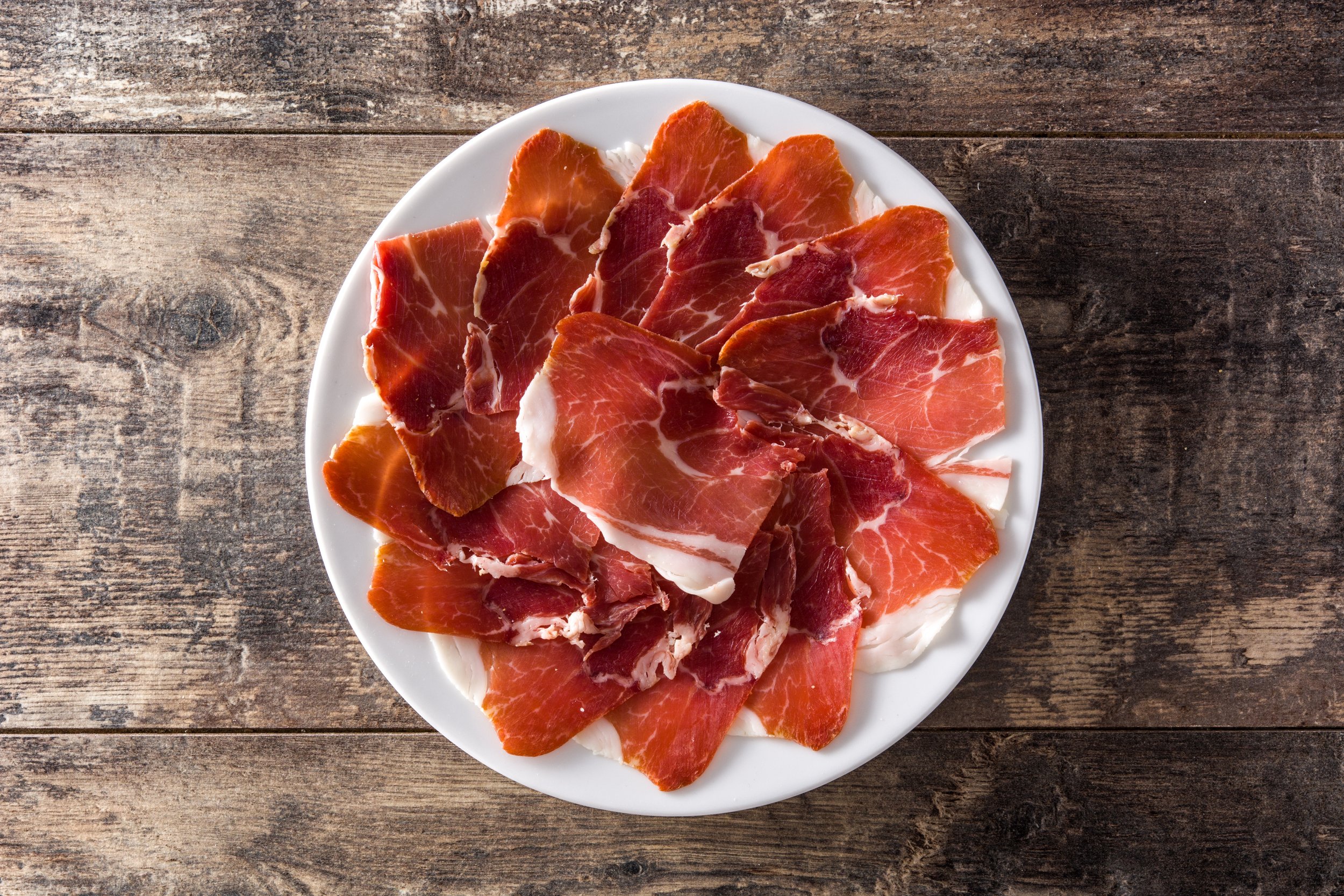
Unlike processed meats treated with nitrates and nitrites, fermented meats are made through a natural process that both preserves the meat and enhances its flavor. Fermented meat has been a staple in many cultures for centuries, with dried raw ham among the most popular. Italian and Spanish raw ham—prosciutto crudo and jamón ibérico—are two famous cured hams made without chemicals. They're similar in many ways, but differ in several respects:
Meat Source: Italian raw ham is typically made from the hind leg of domestic pigs, while Spanish ham comes from the back leg of the Iberian pig—a breed raised on acorns and other foraged foods, which gives the ham a unique flavor and texture.
Curing Process: Italian raw ham is usually cured with salt, spices, and herbs, while Spanish raw ham uses just salt and sometimes paprika. The Spanish curing process is generally longer and more intense, for a more robust, distinctive flavor.
Fat Content: Spanish raw ham is known for its high level of healthy monounsaturated fat, giving it a rich, buttery texture. Italian raw ham is leaner, with a more delicate texture and milder flavor.
Serving: Spanish raw ham is usually sliced thin and served as an appetizer, while Italian raw ham often goes in sandwiches or on pizza.
Both Italian and Spanish raw ham are delicious, versatile foods, and the differences in source, curing, and flavor make each unique.

What does fermentation do for meat?
Fermented meat is a good source of vitamins and minerals, including B12, B6, and niacin, plus iron, phosphorus, and zinc—nutrients that matter for energy production, DNA synthesis, and neurotransmitter function. Beyond nutrition, fermented meat carries probiotic benefits. Probiotics are beneficial bacteria that help balance the gut microbiome and support digestive health. When you eat fermented meat, those bacteria can colonize the gut and keep harmful bacteria in check, improving digestion, reducing bloating and gas, and even boosting immunity. There's also a lower risk of foodborne illness: during fermentation, beneficial bacteria kill off harmful ones, making the meat safer—important for people who are immune-compromised or have weakened digestive systems.
Organic dry raw ham is a great way to get these benefits. Organic meats are free of hormones, antibiotics, and other harmful chemicals, and they're typically raised more humanely, which improves overall quality. Organic dry raw ham is a good source of vitamins B12, B6, and niacin, plus iron, phosphorus, and zinc—key for energy production, DNA synthesis, and neurotransmitter function. It's also delicious and versatile: sliced thin as a snack or appetizer, added to soups, stews, and pasta, or used to flavor eggs and omelets.
Red meat has traditionally been viewed as unhealthy for its saturated fat and additives, but it's important to separate fresh from processed. Processed meat carries nitrates and nitrites that can form cancer-causing nitrosamines. Fermented meat like organic dry raw ham provides more nutrition and probiotic benefits, making it a healthier choice—good essential vitamins and minerals, plus flavor and versatility. Choose organic, fermented meat products, and you reap the benefits while enjoying tasty food.
References:
1. Tricker A. R. (1997). N-nitroso compounds and man: sources of exposure, endogenous formation and occurrence in body fluids. European Journal of cancer prevention: the official journal of the European Cancer Prevention Organisation (ECP), 6(3), 226–268.
2. Santarelli, R. L., Vendeuvre, J. L., Naud, N., Taché, S., Guéraud, F., Viau, M., Genot, C., Corpet, D. E., & Pierre, F. H. (2010). Meat processing and colon carcinogenesis: cooked, nitrite-treated, and oxidized high-heme cured meat promotes mucin-depleted foci in rats. Cancer prevention research (Philadelphia, Pa.), 3(7), 852–864. https://doi.org/10.1158/1940-6207.CAPR-09-0160
3. Mirvish, S. S., Haorah, J., Zhou, L., Clapper, M. L., Harrison, K. L., & Povey, A. C. (2002). Total N-nitroso compounds and their precursors in hot dogs and in the gastrointestinal tract and feces of rats and mice: possible etiologic agents for colon cancer. The Journal of Nutrition, 132(11 Suppl), 3526S–3529S. https://doi.org/10.1093/jn/132.11.3526S
4. Jakszyn, P., & Gonzalez, C. A. (2006). Nitrosamine and related food intake and gastric and oesophageal cancer risk: a systematic review of the epidemiological evidence. World Journal of gastroenterology, 12(27), 4296–4303. https://doi.org/10.3748/wjg.v12.i27.4296
5. Bingham, S. A., Pignatelli, B., Pollock, J. R., Ellul, A., Malaveille, C., Gross, G., Runswick, S., Cummings, J. H., & O’Neill, I. K. (1996). Does increased endogenous formation of N-nitroso compounds in the human colon explain the association between red meat and colon cancer? Carcinogenesis, 17(3), 515–523. https://doi.org/10.1093/carcin/17.3.515
6. (n.d.). What is prosciutto? Parmacrown. Retrieved February 1, 2023, from https://parmacrown.com/
7. (n.d.). About Jamón Serrano. Jamón – The Artisanal Ham Of Spain. Retrieved February 1, 2023, from https://www.jamon.com
FAQ
Is all red meat unhealthy?
No—the concern is processed meat, which carries nitrates and nitrites that can form cancer-linked nitrosamines. Fresh and naturally fermented meats are different.
What does fermentation do for meat?
It makes meat more digestible, raises B vitamins and iron, adds probiotic benefits, and lowers foodborne-illness risk by letting beneficial bacteria outcompete harmful ones.
What are examples of fermented meat?
Italian prosciutto crudo and Spanish jamón ibérico—cured without chemicals—and organic dry raw ham, which adds B12, B6, niacin, iron, phosphorus, and zinc.


Casual and athletic in design, Tateki Tech presents All Over Print pullover in black. It features a Tateki Tech script pattern throughout for signature style. This sporty top features a drawstring hood and the classic allover logo makes a statement. Ribbing at the hem and cuffs adds comfort and shape to this layer.
Detail
All-Over Print Unisex Hoodie has a comfortable relaxed fit, and a fabric that feels soft to the touch thanks to the unique cotton and polyester blend. The brushed fleece inside makes this hoodie a true wardrobe favorite.
70% polyester, 27% cotton, 3% elastane
Fabric weight: 8.85 oz/yd² (300 g/m²)
Soft cotton-feel fabric face
Brushed fleece fabric inside
Unisex style
Overlock seams
Download CPSIA compliance certificates here


Discount Code “TATEKIMATSUDA“


NEWS
OPTIMIZED LIFE

TATEKITCHEN
BLOG

Fought in the cage for nearly twenty years. Studied the science afterward. Now taking both to Mumbai. On 15–16 August 2026, Tateki Matsuda speaks on the Main Stage at Longevity Summit India 2026 at Fairmont Mumbai, with a talk titled The Fighter's Paradox: Stress Makes Us Stronger — Until It Doesn't. The summit is built on a five-dimensional framework — Earth, Water, Air, Fire, Flow — and is chaired scientifically by Dr. Arpit Bansal, who joined HOLOLIFE Summit Tokyo in 2025. Tokyo to Mumbai: the direction reverses.