
My daughter drew a parrot.
It's a bird, and she went at it with blues and greens. The colors looked nothing like what kids usually draw.
I looked at it and thought, wait. Is that Matisse in there?
What's up TekNation. Tateki here.
Today I'm going to talk like a dad who has it all figured out. I don't. But I noticed something, and it took me from one kid's drawing all the way to a big phrase: cultural capital. So stick with me.
The parrot that came home from France
My daughter was five when she drew it. Around then her drawings clearly leveled up, and I caught myself thinking, this kid has a pretty good eye.
Yes, I'm her dad. I'm biased. But even with the proud-parent filter off, looking at it coldly, the way she used color was nothing like before.
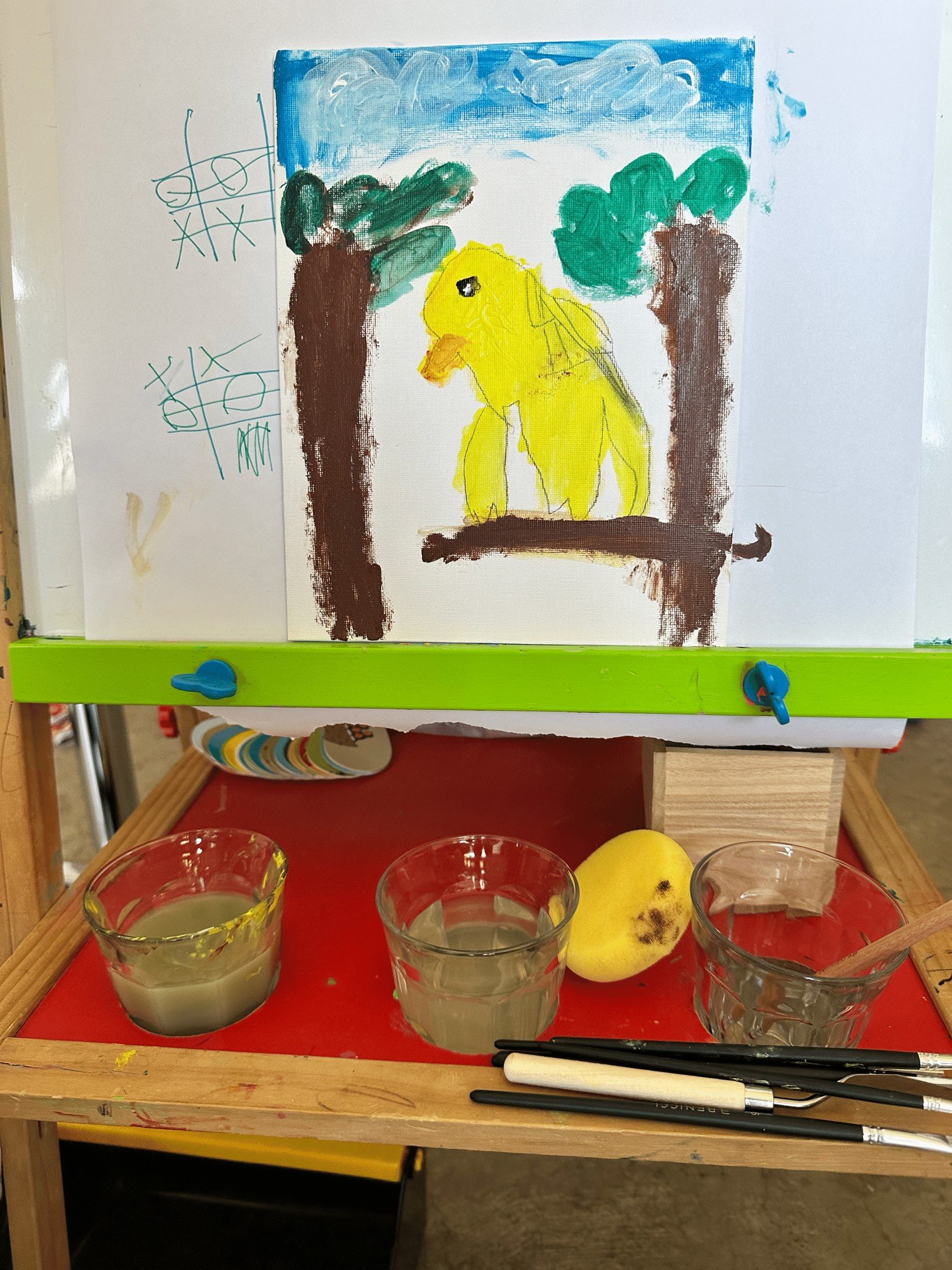
It happened after we came back from France. I was there for work, and while we were there I took her to a Matisse museum and a Chagall museum. It was a lot. But looking at her drawings, I thought, OK, that was worth it.
Take the parrot. Kids usually draw the same kind of picture, the one that fits the mold. I say that as a man whose own art skills are garbage. Hers was different. Even next to other kids' drawings, the colors were clearly not the same. It's a bird, and she used blues and greenish tones. She wasn't going by some fixed idea of what color a thing is supposed to be. She was drawing with the power of color itself.
So I thought, huh. Maybe that's Matisse rubbing off on her.
If the name is fuzzy for you: Henri Matisse is the French painter who became famous as one of the Fauves, "the wild beasts," a label a critic pinned on a group of painters in 1905. Their trademark was intense color.
To be fair, it was not a dreamy, fantastical parrot like something out of Chagall. One master at a time.
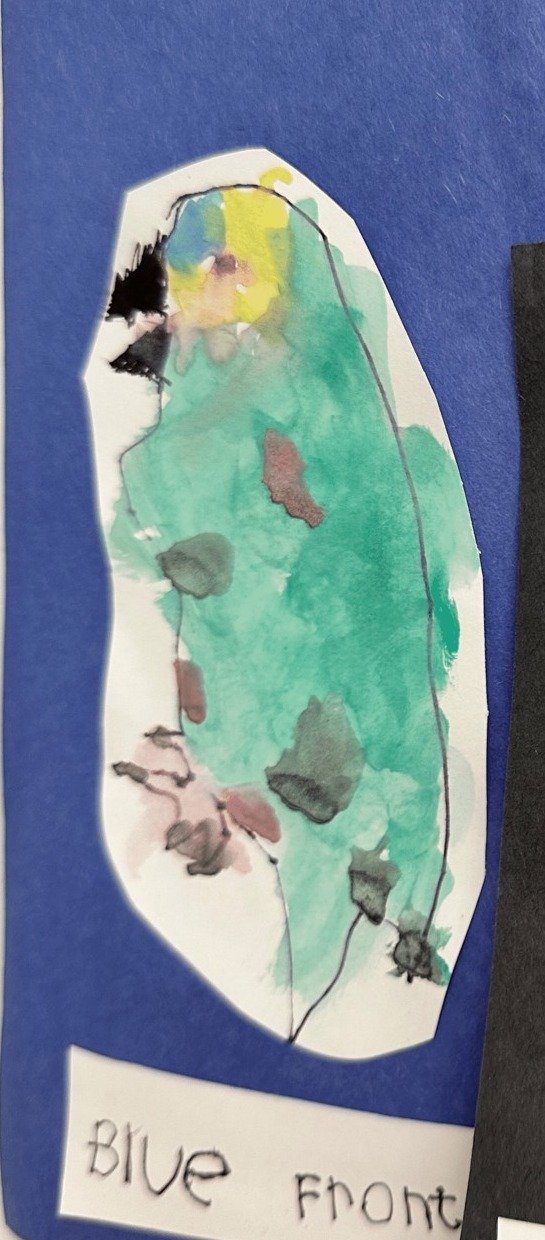
A real artist might see it differently. But I got to watch something grow in her that money can't measure, a kind of sensibility, and as a parent that made me a little happy.
It also got me thinking. Through that time in France, I felt a big difference between how Japan and the West raise kids.
What is shadow education?
Shadow education is private tutoring and cram school on top of regular school. It's an English term, and it describes what I think of as the main road in Japan.
Researchers call it a shadow because it only exists because the school system exists, and when the school system changes shape, so does the tutoring. One book on the subject, published by UNESCO's International Institute for Educational Planning, says that in Japan and other parts of East Asia, shadow education "has long been very visible."
Here's my version. Out of sight, parents send the kid to cram school, to a private tutor, to lessons. The kid gets good grades, then a job at a big company. That's the route. The classic one.
What is cultural capital?
Cultural capital is the education, knowledge, way of speaking and taste a person carries around, the kind of asset that can move you up in society. The term comes from the French sociologist Pierre Bourdieu, who introduced it with Jean-Claude Passeron in the 1970s and later called passing it down "the best hidden form of hereditary transmission of capital." An inheritance nobody sees.
And the way I see it, very roughly, that's where the West puts its money. Europe especially. They invest in culture. History, art, classical music, even table manners. The being-cultured part of a person.
Europe is a continent, to begin with. It's a place where people who speak two or three languages from the day they're born, maybe five if you push it, are just normal. That's a little unfair from the starting line, isn't it.
The official numbers are less dramatic than my version. In a 2024 European Union survey, 59 percent of Europeans could hold a conversation in at least one foreign language, and 28 percent in at least two. Still, that's a head start.
Add to those languages the aristocratic culture that has deep roots in places like France, Italy and Britain. From what I've heard, wealthy families in Europe spend money and create chances so their kids pick up a certain snobby instinct, the kind you absorb and no test score can measure.
That's only what I've been told. Don't quote me.
Why I think Japan's exam war is fair, and Europe's filter is cruel
Don't get me wrong. I'm not playing the guy who fell for the West and now announces that Japan is doing it all wrong. Not even a little.
If anything, I think the Japanese system is great in its own way.
To me, Japan's exam war is about as equal as it gets. Yes, the gap between rich and poor is wider now than it used to be. But basically, parents pay for an education where the effort is visible, the kid does the work, and the kid gets into a good school. Whether getting into a good college still means you win at life these days is a separate conversation. At the very least, it's a system where effort gets rewarded.
The European way, on the other hand, has a cruel side.
Raising kids on culture and history, teaching them to dress the part, flips over into something else. The moment someone says, "Wait, you don't know that?", you've been filtered out.
The people at the top may not exactly look down on people who don't have that background. But in a way, they draw a clear line. "Oh. You're from a different world."
No right answer, and where I am now
When I look at that reality, the class-society side of Europe, I think, yeah, that's not it either.
So I honestly don't know the right way to raise my own kids. Where I've landed is modest. Since we get chances like this, I might as well let her touch that side a little too. Culture, and being cultured.
There really is no right answer in parenting. Moms and dads everywhere are working hard at it every day, and I'm right there with you. I have no idea what's correct.
But my daughter came home from France and clearly leveled up. She drew a parrot in colors that have real presence, a bit like Matisse. I looked at it and thought, OK. Maybe I managed to do one thing a parent can do.
That's the whole story. I happened to look at my daughter's drawing, and this is where my head went.
Your turn. What did your parents bet on when you were a kid, grades or culture? And if you have kids, what are you betting on now? Tell me in the comments.
Quick facts
Pierre Bourdieu and Jean-Claude Passeron introduced the idea of cultural capital in the 1970s. It covers assets like education, knowledge, the way you speak and your taste, the kind that can help a person move up in society.
In his 1986 essay The Forms of Capital, Bourdieu wrote that cultural capital can exist in three forms: embodied, objectified and institutionalized.
Mark Bray's 2009 book Confronting the Shadow Education System, published by UNESCO's International Institute for Educational Planning, explains the name. Private tutoring is a shadow because it exists only because mainstream schooling exists, and its size and shape change when the mainstream system changes.
In the European Union's 2024 Eurobarometer survey on languages, 59 percent of Europeans could hold a conversation in at least one foreign language. For at least two, it was 28 percent. The numbers are from the European Commission.
The critic Louis Vauxcelles came up with the name Fauves, French for "the wild beasts," after he saw work by Henri Matisse and André Derain at the 1905 Salon d'Automne in Paris. That is how the Tate tells it.
Want the next one in your inbox? Join TekNation with the newsletter sign-up form on this page.


Casual and athletic in design, Tateki Tech presents All Over Print pullover in black. It features a Tateki Tech script pattern throughout for signature style. This sporty top features a drawstring hood and the classic allover logo makes a statement. Ribbing at the hem and cuffs adds comfort and shape to this layer.
Detail
All-Over Print Unisex Hoodie has a comfortable relaxed fit, and a fabric that feels soft to the touch thanks to the unique cotton and polyester blend. The brushed fleece inside makes this hoodie a true wardrobe favorite.
70% polyester, 27% cotton, 3% elastane
Fabric weight: 8.85 oz/yd² (300 g/m²)
Soft cotton-feel fabric face
Brushed fleece fabric inside
Unisex style
Overlock seams
Download CPSIA compliance certificates here


Discount Code “MATSUDA”

Discount Code “TATEKIMATSUDA”




Discount Code “TATEKI“

NEWS
- October 2026
- September 2026
- August 2026
- July 2026
- April 2026
- March 2026
- October 2025
- September 2025
- August 2025
- June 2025
- May 2025
- April 2025
- September 2024
- August 2024
- July 2024
- June 2024
- May 2024
- April 2024
- March 2024
- February 2024
- November 2023
- October 2023
- September 2023
- August 2023
- April 2023
- March 2023
- December 2022
- October 2022
- August 2022
- July 2022
- June 2022
- May 2022
- April 2022
- March 2022
- February 2022
- January 2022
- December 2021
- November 2021
- May 2021
- March 2021
- January 2021
- July 2020
- April 2020
- January 2020
- November 2019
- September 2019
- August 2019
- July 2019
- June 2019
- March 2019
- January 2019
- December 2018
- October 2018
- September 2018
- July 2018
- May 2018
- April 2018
- September 2017
- March 2017
- January 2017
- December 2016
- November 2016
- September 2016
- July 2016
- February 2016
- January 2016
- December 2015
- October 2015
- September 2015
- January 2015
- November 2014
- September 2014
- August 2014
Optimized Life
- November 2026
- October 2026
- September 2026
- August 2026
- February 2026
- December 2025
- June 2025
- July 2024
- April 2024
- October 2023
- September 2023
- May 2023
- April 2023
- March 2023
- January 2023
- December 2022
- November 2022
- October 2022
- August 2022
- June 2022
- November 2019
- August 2019
- July 2019
- June 2019
- May 2019
- March 2019
- December 2018
- August 2018
- June 2018
- December 2017
- November 2017
- October 2017
- September 2017
- September 2016
- August 2016
- February 2016
- May 2015
- April 2015
- February 2015
- August 2014
- June 2014
Tatekitchen
- November 2026
- September 2026
- April 2026
- February 2026
- January 2026
- December 2025
- November 2025
- February 2025
- January 2025
- December 2024
- November 2024
- October 2024
- September 2024
- August 2024
- July 2024
- June 2024
- May 2024
- April 2024
- February 2024
- January 2024
- December 2023
- November 2023
- September 2023
- July 2023
- June 2023
- May 2023
- February 2023
- January 2023
- December 2022
- November 2022
- August 2022
- January 2022
- December 2021
- November 2021
- September 2021
- July 2021
- June 2021
- May 2021
- April 2021
- March 2021
- February 2021
- January 2021
- December 2020
- November 2020
- September 2020
- August 2020
- June 2020
- May 2020
- February 2020
- December 2019
- November 2019
- August 2019
- May 2019
- March 2019
- February 2019
- January 2019
- November 2018
- October 2018
- June 2018
- May 2018
- January 2018
- December 2017
- November 2017
- September 2017
- July 2017
- May 2017
- April 2017
- January 2017
- December 2016
- October 2016
- September 2016
- July 2016
- May 2016
- April 2016
- March 2016
- February 2016
- January 2016
- November 2015
- May 2015
- April 2015
- March 2015
- October 2014
- September 2014
- August 2014
- June 2014
- May 2014
- February 2014
- June 2013
- April 2013
- March 2013
- November 2012
- September 2012
- July 2012
- June 2012
- May 2012
- March 2012
NEWS

OPTIMIZED LIFE



TATEKITCHEN
BLOG


The Japan Biohacking Association published its first press release on PR TIMES on October 21, 2026, announcing its establishment and international collaboration activities.