
Japanese Chrono Trigger: Rethinking Time and Longevity

Summary & Key Takeaways
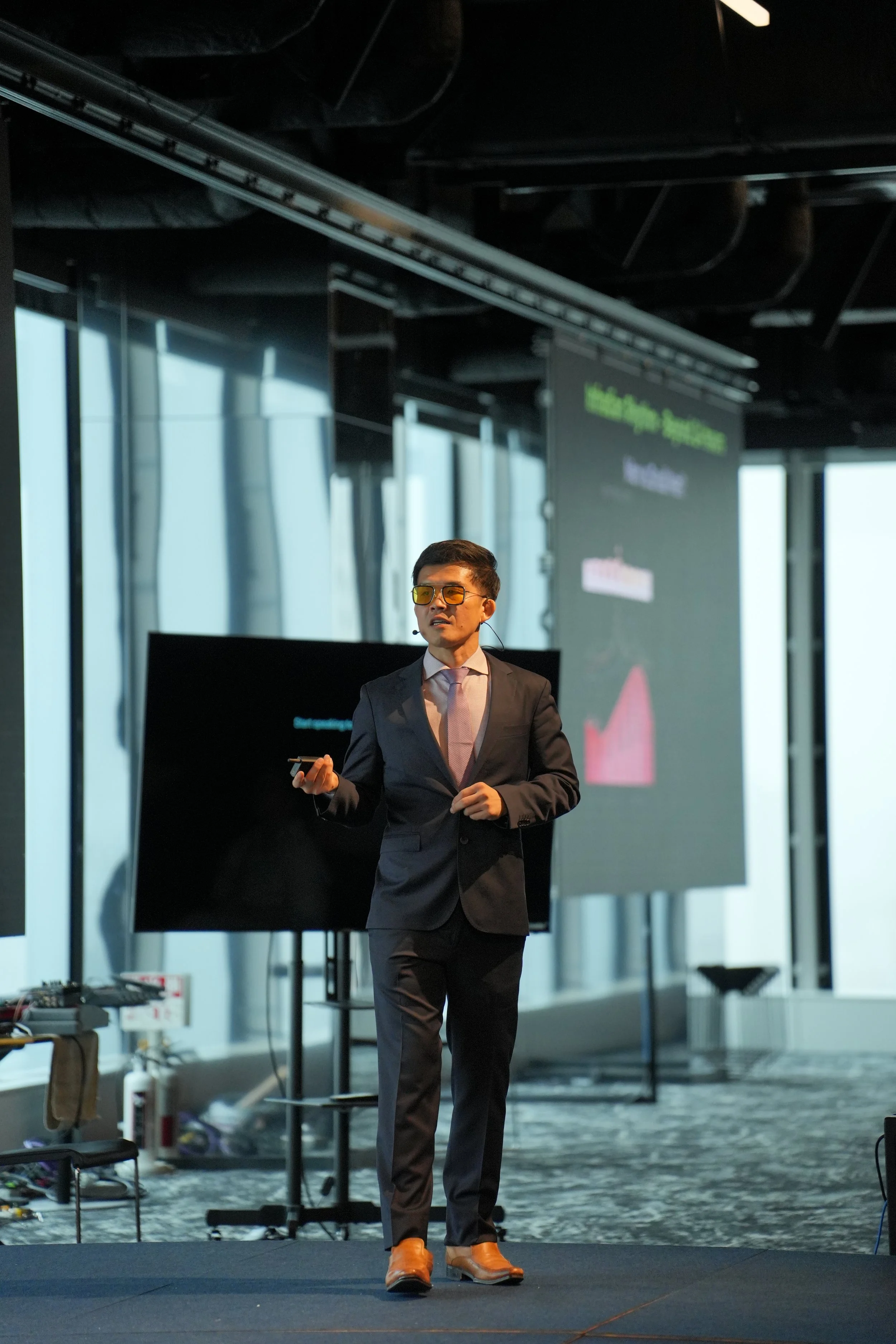
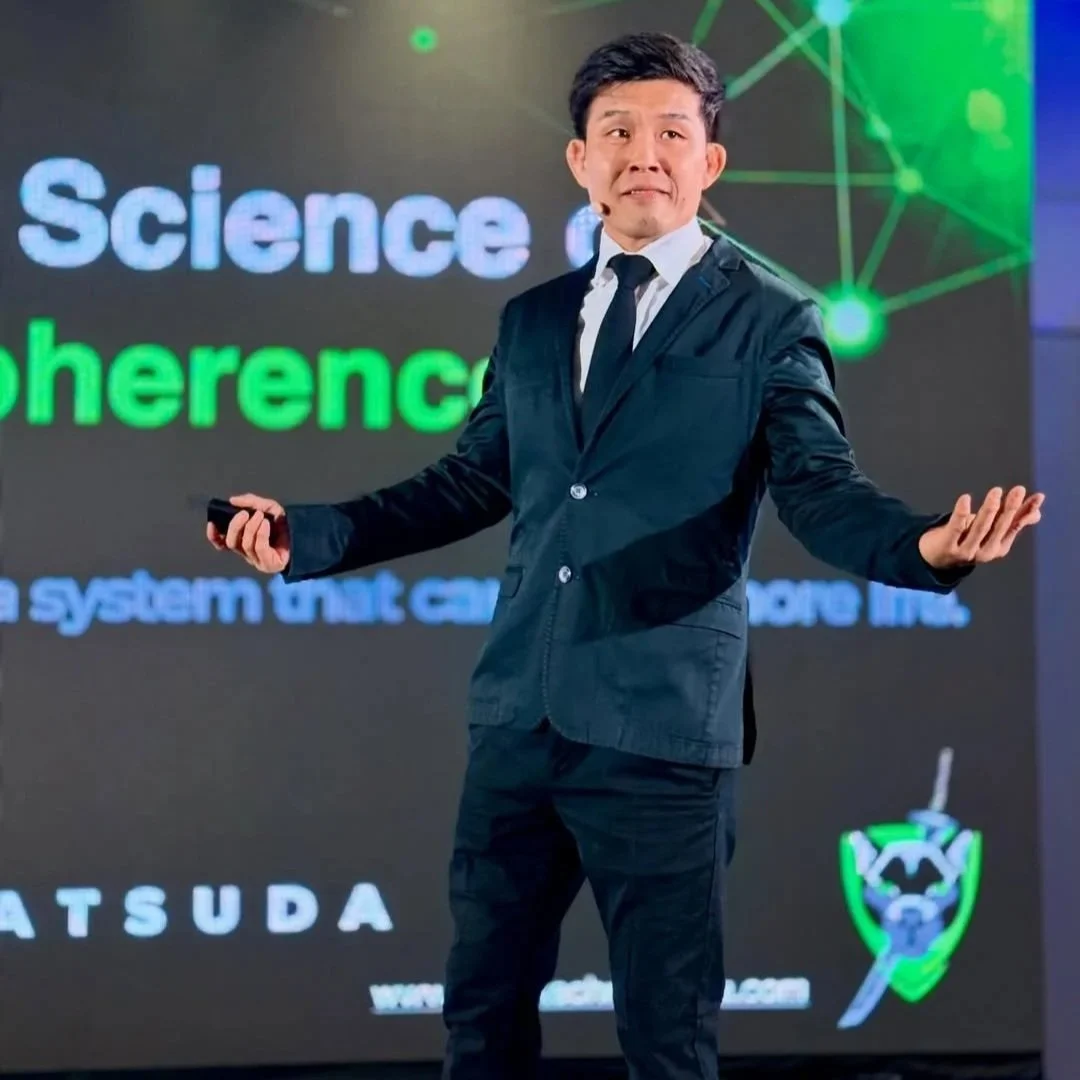
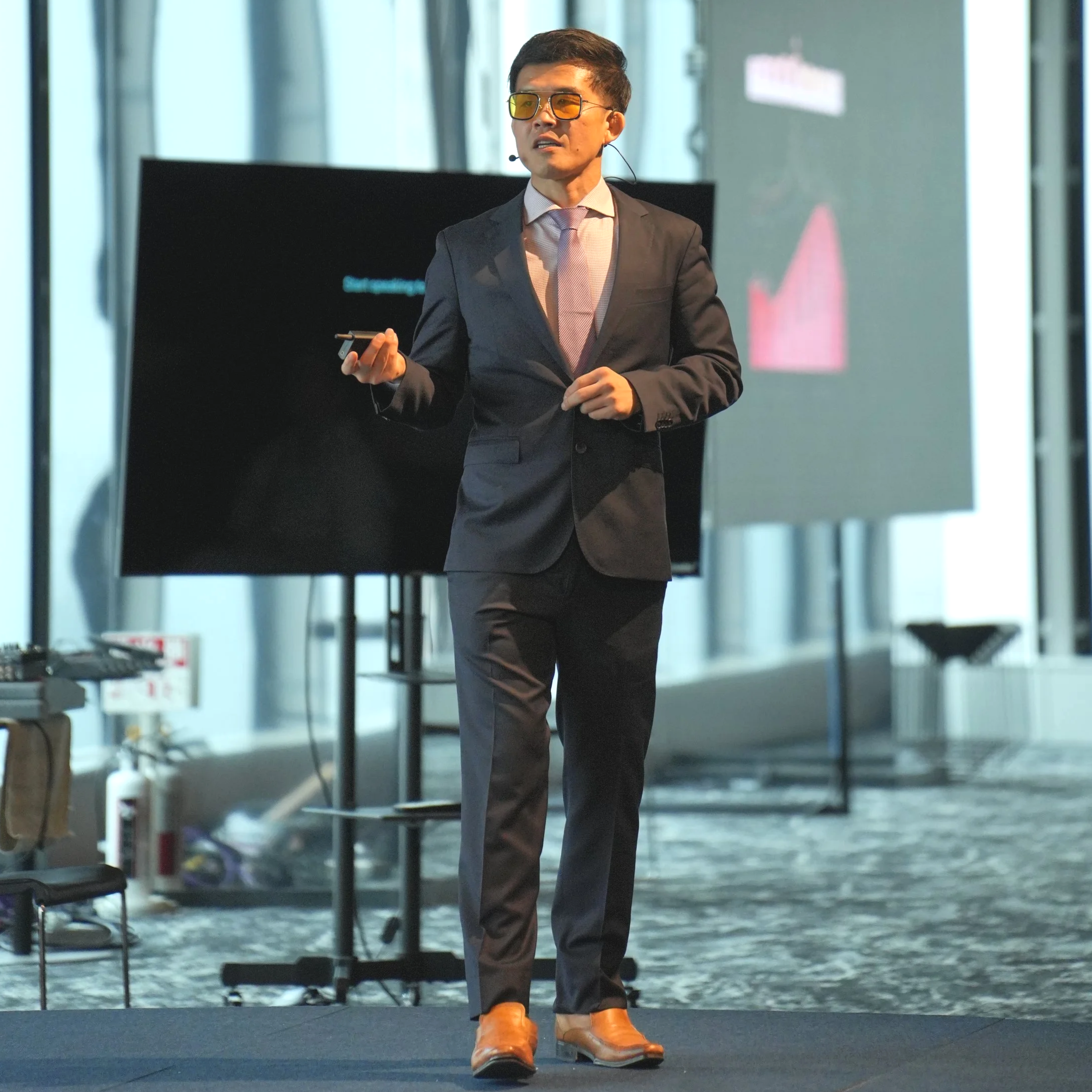
At Hololife Summit 2025 in Tokyo, I argued that how you perceive time may matter as much for longevity as your biomarkers.
The Western view runs against the clock; the pre-Meiji Japanese view saw time as something that approaches you.
Real biohacking honors both circadian (daily) and infradian (monthly/seasonal) rhythms—a major gap in female health research.
The social time curve warns that solitude grows with age; optimize relationships as rigorously as mitochondria.
Don't just live longer. Live deeper. Synchronize with time instead of trying to control it.
Do You Chase Time, or Do You Let It Come to You?
Rethinking Longevity Through Japanese Wisdom and Modern Science
Did you know that how you perceive time might matter as much for your longevity as your biomarkers?
We're obsessed with "saving" time. We treat it like a finite resource to manage, hack, and control. But in the cage, fighting for my life, time didn't exist at all. And the ancient Japanese understood something about time that modern biohackers are just starting to rediscover.
At the recent Hololife Summit 2025 in Tokyo, I challenged the audience to rethink their relationship with time, testosterone, and human optimization. We get lost in the biochemistry, but true longevity isn't just about living to 120. It's about the depth of the life you live today.
Here are the key takeaways from my presentation on blending ancient philosophy with cutting-edge science.
Chasing the future costs your present; your internal time clock burns your own present for the future. Mastering time is not to control it, but to synchronize it. Live not longer, but deeper—because you live at the moment deeper.
— Tateki Matsuda
Quick Show Notes & Takeaways
Philosophy: Shift from "managing" time to "synchronizing" with it. Stop chasing the future at the expense of the present.
Rhythms: optimize your schedule based on Circadian (daily) and Infradian (monthly/seasonal) rhythms.
Community: Prioritize social connection to combat the isolation of aging.
No master clock: Time is relative (physics) and local (biology); live your proper time.
Coherence > accumulation: Align circadian/infradian clocks; longevity emerges from synchronization.
Reflective optimization: Data is useful—pair it with presence or you only accelerate.
Design for variability: Honor menstrual cycles and seasonal rhythms—optimize with nature, not against it.
Depth per second: Novelty, relationships, and mindful solitude stretch lived time.
You reframe longevity from “chasing more time” to synchronizing with time. Drawing on physics, chronobiology, Japanese time culture (Wadokei/不定時法), and Zen—as well as your MMA experience of flow—you show that healthspan expands when we align our body’s clocks (circadian/infradian), our social rhythms, and our moment-to-moment awareness. Western optimization (“time is money”) is rational, but incomplete without presence. The Japanese lens adds reciprocity with nature: time doesn’t just pass; it approaches—and our task is to receive it well.
Shownote:
The Philosophy of Time
Janet’s Law / Time Compression >The Theory of Morals by Paul Janet, Mary Chapman Review by: Francis G. Peabody Science, Vol. 3, No. 59 (Mar. 21, 1884), pp. 360-362 (3 pages)
Human time perception and its illusions >Eagleman DM. Human time perception and its illusions. Curr Opin Neurobiol. 2008 Apr;18(2):131-6. doi: 10.1016/j.conb.2008.06.002. Epub 2008 Aug 8. PMID: 18639634; PMCID: PMC2866156.
Circadian physiology of metabolism > Panda S. Circadian physiology of metabolism. Science. 2016 Nov 25;354(6315):1008-1015. doi: 10.1126/science.aah4967. PMID: 27885007; PMCID: PMC7261592.
Gender Data Gap
Relative dearth of 'sex differences' research in sports medicine >Schilaty ND, Bates NA, Hewett TE. Relative dearth of 'sex differences' research in sports medicine. J Sci Med Sport. 2018 May;21(5):440-441. doi: 10.1016/j.jsams.2017.10.028. Epub 2017 Nov 3. PMID: 29248307; PMCID: PMC5927370.
IJES Self-Study on Participants' Sex in Exercise Science: Sex-Data Gap and Corresponding Author Survey > Garver MJ, Navalta JW, Heijnen MJH, Davis DW, Reece JD, Stone WJ, Siegel SR, Lyons TS. IJES Self-Study on Participants' Sex in Exercise Science: Sex-Data Gap and Corresponding Author Survey. Int J Exerc Sci. 2023 Mar 1;16(6):364-376. doi: 10.70252/DZZC8088. PMID: 37123815; PMCID: PMC10128117.
Brain insulin action on peripheral insulin sensitivity in women depends on menstrual cycle phase > Hummel J, Benkendorff C, Fritsche L, Prystupa K, Vosseler A, Gancheva S, Trenkamp S, Birkenfeld AL, Preissl H, Roden M, Häring HU, Fritsche A, Peter A, Wagner R, Kullmann S, Heni M. Brain insulin action on peripheral insulin sensitivity in women depends on menstrual cycle phase. Nat Metab. 2023 Sep;5(9):1475-1482. doi: 10.1038/s42255-023-00869-w. Epub 2023 Sep 21. PMID: 37735274; PMCID: PMC10513929.
Changes in sleeping energy metabolism and thermoregulation during menstrual cycle > Zhang S, Osumi H, Uchizawa A, Hamada H, Park I, Suzuki Y, Tanaka Y, Ishihara A, Yajima K, Seol J, Satoh M, Omi N, Tokuyama K. Changes in sleeping energy metabolism and thermoregulation during menstrual cycle. Physiol Rep. 2020 Jan;8(2):e14353. doi: 10.14814/phy2.14353. PMID: 31981319; PMCID: PMC6981303.
Insulin Sensitivity, Food Intake, and Cravings with Premenstrual Syndrome: A Pilot Study > Trout KK, Basel-Brown L, Rickels MR, Schutta MH, Petrova M, Freeman EW, Tkacs NC, Teff KL. Insulin sensitivity, food intake, and cravings with premenstrual syndrome: a pilot study. J Womens Health (Larchmt). 2008 May;17(4):657-65. doi: 10.1089/jwh.2007.0594. PMID: 18447765; PMCID: PMC3319142.
Association between subjective and cortisol stress response depends on the menstrual cycle phase > Duchesne, A., & Pruessner, J. C. (2013). Association between subjective and cortisol stress response depends on the menstrual cycle phase. Psychoneuroendocrinology, 38(12), 3155–3159. https://doi.org/10.1016/j.psyneuen.2013.08.009
Effects of the menstrual cycle on exercise performance > Janse de Jonge X. A. (2003). Effects of the menstrual cycle on exercise performance. Sports medicine (Auckland, N.Z.), 33(11), 833–851. https://doi.org/10.2165/00007256-200333110-00004
Impact of Menstrual cycle-based Periodized training on Aerobic performance, a Clinical Trial study protocol—the IMPACT study > Ekenros L, von Rosen P, Norrbom J, Holmberg HC, Sundberg CJ, Fridén C, Hirschberg AL. Impact of Menstrual cycle-based Periodized training on Aerobic performance, a Clinical Trial study protocol-the IMPACT study. Trials. 2024 Jan 29;25(1):93. doi: 10.1186/s13063-024-07921-4. PMID: 38287424; PMCID: PMC10823667.
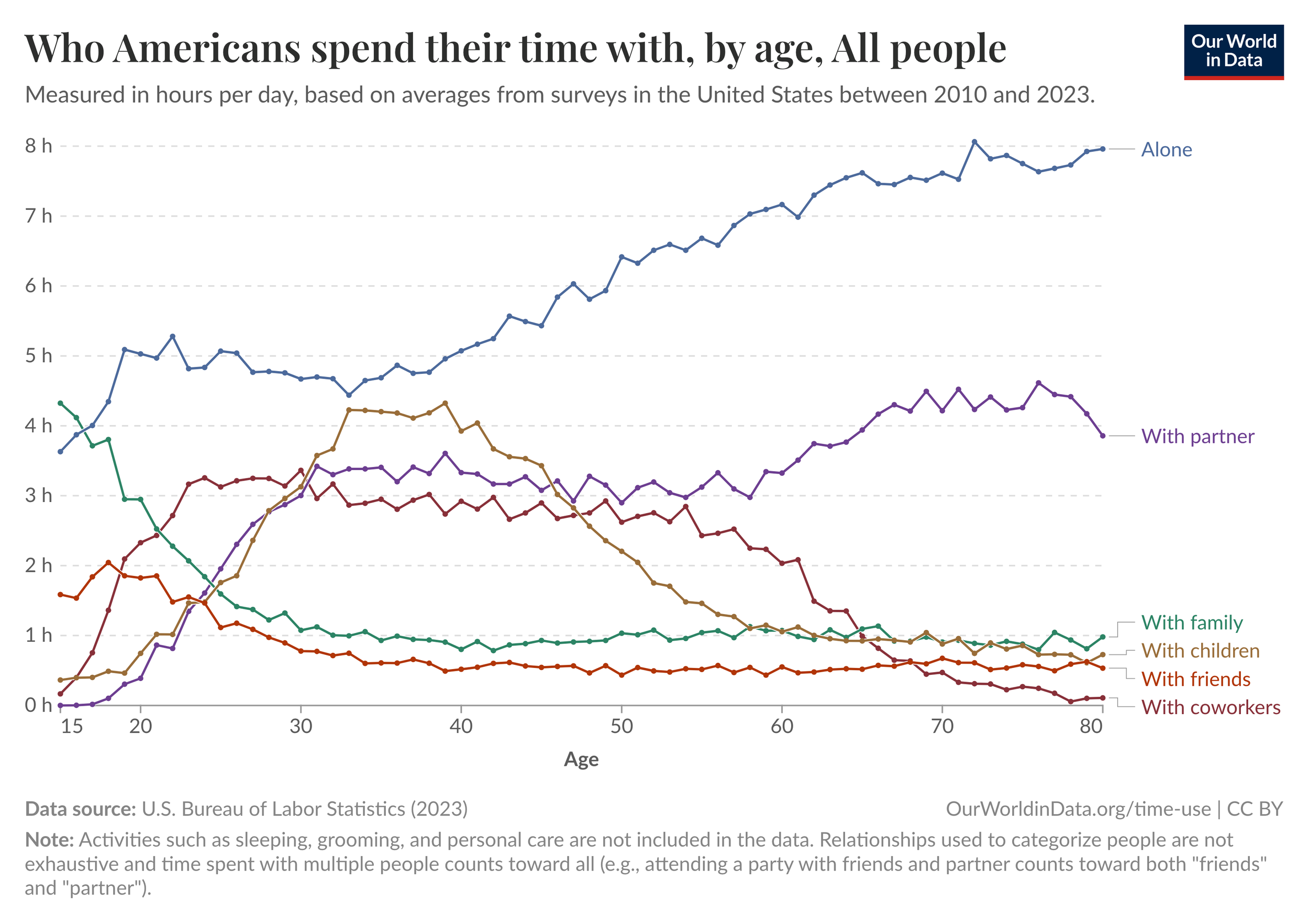
Time Curve: The Loneliness of Longevity
Who Americans spend their time with, by age, All people > Our Would in data: Measured in hours per day, based on averages from surveys in the United States between 2010 and 2023.
Social Relationships and Mortality Risk: A Meta-analytic Review > Holt-Lunstad J, Smith TB, Layton JB. Social relationships and mortality risk: a meta-analytic review. PLoS Med. 2010 Jul 27;7(7):e1000316. doi: 10.1371/journal.pmed.1000316. PMID: 20668659; PMCID: PMC2910600.
Meditation experience is associated with differences in default mode network activity and connectivity > Brewer JA, Worhunsky PD, Gray JR, Tang YY, Weber J, Kober H. Meditation experience is associated with differences in default mode network activity and connectivity. Proc Natl Acad Sci U S A. 2011 Dec 13;108(50):20254-9. doi: 10.1073/pnas.1112029108. Epub 2011 Nov 23. PMID: 22114193; PMCID: PMC3250176.
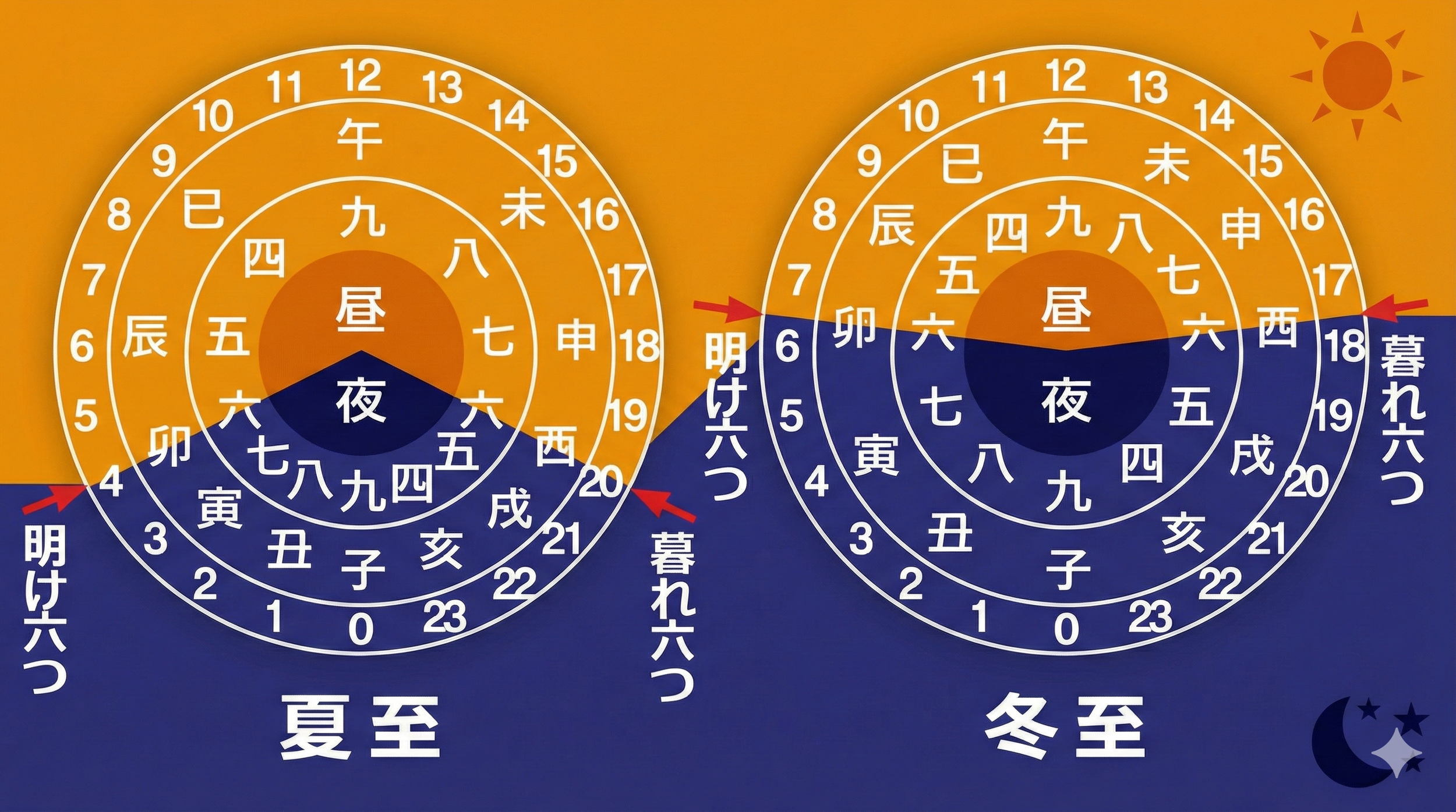
Time is a Visitor, Not a Resource
In the West, we see time as a road we travel down—something we move through. We're always running toward the future. But before the Meiji era, the Japanese idea of time was radically different: time was seen as something that approaches the individual.
This isn't just semantics. It changes everything.
The Western view: You're running against the clock. This breeds anxiety, burnout, and a constant "future-chasing" mindset where the present is sacrificed for a better tomorrow.
The Japanese view: You are the anchor. Time comes to you. Your job isn't to control it, but to synchronize with it.
As a former UFC fighter, I know this state well. In the cage, there's no past and no future. There's only the immediate response to the present moment. Think about the next round and you get knocked out. This martial arts mindfulness—this Zen—is the antidote to the burnout of modern optimization.
Respecting Biological Rhythms (Circadian vs. Infradian)
Biohacking is useless if you're fighting your own biology. We talk a lot about the circadian rhythm (the 24-hour cycle) that governs everything from morning cortisol spikes to melatonin at night.
But mainstream science has largely ignored infradian rhythms—cycles that last longer than a day. This is a huge gap in female health optimization. Women run hormonal cycles spanning 28 to 36 days, yet most research is done on male subjects. True biohacking means acknowledging this biological variability. One-size-fits-all protocols don't work.
The Social Time Curve
Maybe the most striking insight for me is the "social time curve." Data shows that as we age, the time we spend alone increases while time with friends and family decreases.
If the goal is radical life extension—living to 120 or beyond—we have to ask: Are we prepared for the solitude?
Good relationships are the clearest factor in a satisfying life. Every interaction deepens your "inner time mass," giving your life texture and weight. Longevity without community is just a long, lonely wait. We have to optimize our relationships as rigorously as we optimize our mitochondria.
Synchronize, Don't Control
My mother's name is Kazuko, which means "harmonize." That's the core of my philosophy. Optimization without reflection leads to acceleration, but not evolution. We're becoming "human becomings" rather than human beings.
Science decodes the structure of time, but culture shapes how we use it. Don't just chase a longer life. Synchronize with the natural rhythms of your body and the world around you. Live not just longer, but deeper.
Time approaches whether you're ready or not. How will you meet it?
FAQ
What's the difference between the Western and Japanese views of time?
The Western view runs against the clock, sacrificing the present for the future. The pre-Meiji Japanese view saw time as something that approaches you—your task is to synchronize with it, not control it.
What are circadian and infradian rhythms?
Circadian is the 24-hour cycle; infradian rhythms last longer than a day, like the 28-to-36-day hormonal cycles in women—an area largely ignored because most research uses male subjects.
What is the "social time curve"?
Data showing that as we age, time alone increases and time with friends and family decreases—so relationships deserve to be optimized as rigorously as mitochondria.


Casual and athletic in design, Tateki Tech presents All Over Print pullover in black. It features a Tateki Tech script pattern throughout for signature style. This sporty top features a drawstring hood and the classic allover logo makes a statement. Ribbing at the hem and cuffs adds comfort and shape to this layer.
Detail
All-Over Print Unisex Hoodie has a comfortable relaxed fit, and a fabric that feels soft to the touch thanks to the unique cotton and polyester blend. The brushed fleece inside makes this hoodie a true wardrobe favorite.
70% polyester, 27% cotton, 3% elastane
Fabric weight: 8.85 oz/yd² (300 g/m²)
Soft cotton-feel fabric face
Brushed fleece fabric inside
Unisex style
Overlock seams
Download CPSIA compliance certificates here




Discount Code “TATEKI“
-
Biohacking
- Jun 4, 2018 Mushroom Coffee
- Aug 1, 2018 keto box
- Mar 17, 2019 Keto Mojo
- Nov 2, 2019 Biohacker Summit Helsinki 2019
- Jun 4, 2022 Biohacker Summit Helsinki 2022
- Oct 16, 2022 Biohacker Summit Amsterdam 2022
- May 1, 2023 Biohacker’s Retreat April 2023
- Sep 4, 2023 Biohacker Summit London 2023 Show notes
- Sep 18, 2023 Biohacker’s Retreat September 2023
- Oct 29, 2023 Biohacker Summit Amsterdam 2023 Show Notes
- Apr 10, 2024 Biohacker’s Retreat in IBIZA 2024
- Jul 3, 2024 Biohacker Summit Helsinki 2024
- Jul 20, 2024 Meltingpot Forum 2024
- Jun 5, 2025 Biohacking Conference 2025
- Dec 10, 2025 Japanese Chrono Trigger: Rethinking Time and Longevity
- Feb 7, 2026 FROM SICK CARE TO HEALTH CREATION
- Aug 15, 2026 The Fighter’s Paradox: Stress Makes Us Stronger — Until It Doesn’t
- Sep 27, 2026 Beyond 120: The Missing Science of Human Coherence
-
Coffee
- Jun 4, 2018 Mushroom Coffee
- Aug 1, 2018 keto box
-
Earthing
- Jun 7, 2019 Earth Runner
-
Gut health
- Jul 2, 2019 Viome
-
Injury
- Sep 11, 2017 Determination
- Sep 29, 2017 Week 3
- Oct 6, 2017 Week 4
- Oct 13, 2017 Week 5
- Oct 30, 2017 Week 6 & 7
- Nov 13, 2017 Week 8 & 9
- Nov 26, 2017 Week 10 & 11
- Dec 30, 2017 After Week 12
-
Nutrition
- Jun 4, 2018 Mushroom Coffee
- Aug 1, 2018 keto box
- Jun 26, 2022 Fermented Foods for Health Optimization
- Aug 10, 2022 Fermented Foods for Immune System
- Oct 2, 2022 Fermented Foods for Healthy Skin
- Nov 7, 2022 Japanese Drinkable IV “Amazake”
- Dec 23, 2022 “Mirin” Sweet Rice Sake Beyond Seasoning
- Jan 29, 2023 Eat “Cultural Heritage.” Osechi Japanese New Year’s Food
- Mar 12, 2023 Fermentation Makes Processed Meat Different
- Apr 13, 2023 Cheese and Your Health: The Impact of Fermentation, Type, and Production Method
-
Performance
- Aug 12, 2018 First time Spartan Race
- Aug 14, 2019 Boston Super and Sprint Weekend 2019
- Nov 9, 2019 Spartan race Boston at Fenway Park 2019
-
Recovery
- Sep 11, 2016 REhydration Process
- May 15, 2019 BIO CBD plus
-
Rehabilitation
- Sep 11, 2017 Determination
- Sep 29, 2017 Week 3
- Oct 6, 2017 Week 4
- Oct 13, 2017 Week 5
- Oct 30, 2017 Week 6 & 7
- Nov 13, 2017 Week 8 & 9
- Nov 26, 2017 Week 10 & 11
- Dec 30, 2017 After Week 12
-
Retreat
- May 1, 2023 Biohacker’s Retreat April 2023
- Sep 18, 2023 Biohacker’s Retreat September 2023
- Apr 10, 2024 Biohacker’s Retreat in IBIZA 2024
-
Strength & Conditioning
- Jun 20, 2014 MMA Fight Prep 1
- Jun 21, 2014 MMA Fight Prep 2
- Jun 23, 2014 MMA Fight Prep 3
- Jun 23, 2014 MMA Fight Prep 4
- Jun 24, 2014 MMA Fight Prep 5
- Aug 27, 2014 Hit some Swings
- Feb 10, 2015 No Season for MMA Fighters
- Apr 10, 2015 Random Day of my Training
- May 29, 2015 Dropping a Weight Class
- Feb 21, 2016 Conditioning during Fight Week
-
Strong First
- Aug 13, 2016 SFG Level 1 Test
-
Supplement
- Jun 4, 2018 Mushroom Coffee
- Aug 1, 2018 keto box
- Dec 10, 2018 Complete Nutrition with Bits
NEWS


OPTIMIZED LIFE

TATEKITCHEN

BLOG
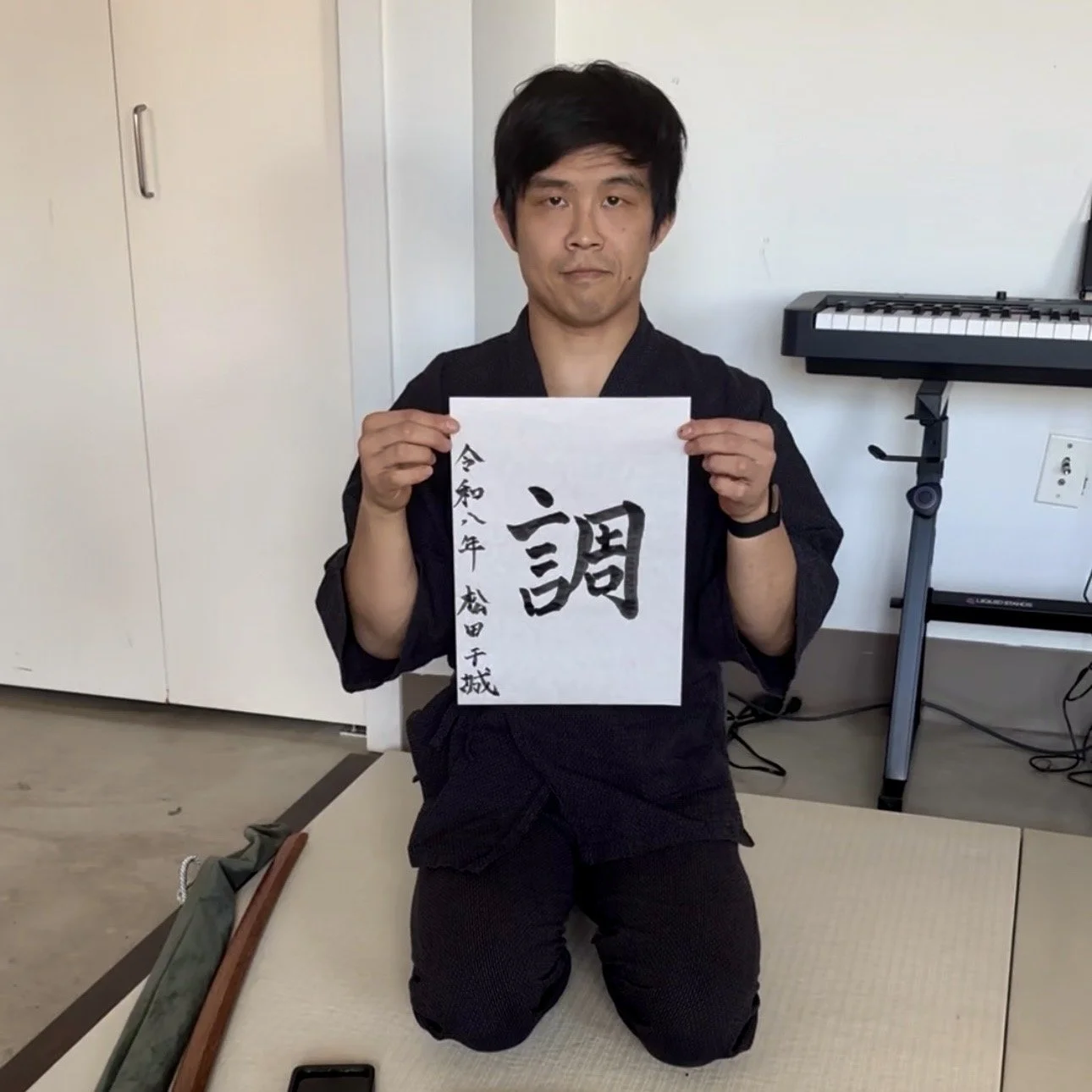


Fought in the cage for nearly twenty years. Studied the science afterward. Now taking both to Mumbai. On 15–16 August 2026, Tateki Matsuda speaks on the Main Stage at Longevity Summit India 2026 at Fairmont Mumbai, with a talk titled The Fighter's Paradox: Stress Makes Us Stronger — Until It Doesn't. The summit is built on a five-dimensional framework — Earth, Water, Air, Fire, Flow — and is chaired scientifically by Dr. Arpit Bansal, who joined HOLOLIFE Summit Tokyo in 2025. Tokyo to Mumbai: the direction reverses.